Lake Champlain Waterfront Landscape Design: Working With Wind, Water, and the View
This guide is for homeowners around Shelburne Bay, Shelburne Point, Charlotte, Ferrisburgh, and Colchester who are planning waterfront gardens, privacy planting, shoreline transitions, or residential landscapes exposed to Lake Champlain weather. It focuses on site-specific plant selection, drainage, wind, seasonal structure, and design that supports the view rather than competing with it.
A lakefront landscapes hardest design factor is weather exposure. Wind finds the gaps. Water finds the low places. A planting that looks perfect in a sheltered nursery bed will behave entirely differently once exposed to the elements of Lake Champlain.
Protect the View Without Leaving the Property Bare
Waterfront homeowners often want two things that appear to conflict: an open view and more privacy. The answer is rarely a solid evergreen wall. A dense screen can block the lake, collect snow, create maintenance problems, and make the property feel disconnected from its setting.
Layered planting is more forgiving. A few carefully placed trees can frame rather than erase the horizon. Shrubs can screen a neighboring path or seating area at eye level. Lower perennials and grasses can hold the foreground together without creating a visual barricade.
The right height depends on where people sit, where they walk, and what they want to see in January.
Wind Changes the Planting Conversation
Wind exposure affects branch strength, desiccation, staking, winter injury, and the way a plant holds its form. It also changes how a garden feels. Grasses move. Seed heads catch light. Trees become silhouettes.
The answer is not to choose only tough plants and stop there. The design should create layers of protection, avoid fragile plants in the most exposed positions, and use the architecture, topography, and existing vegetation as part of the wind strategy.
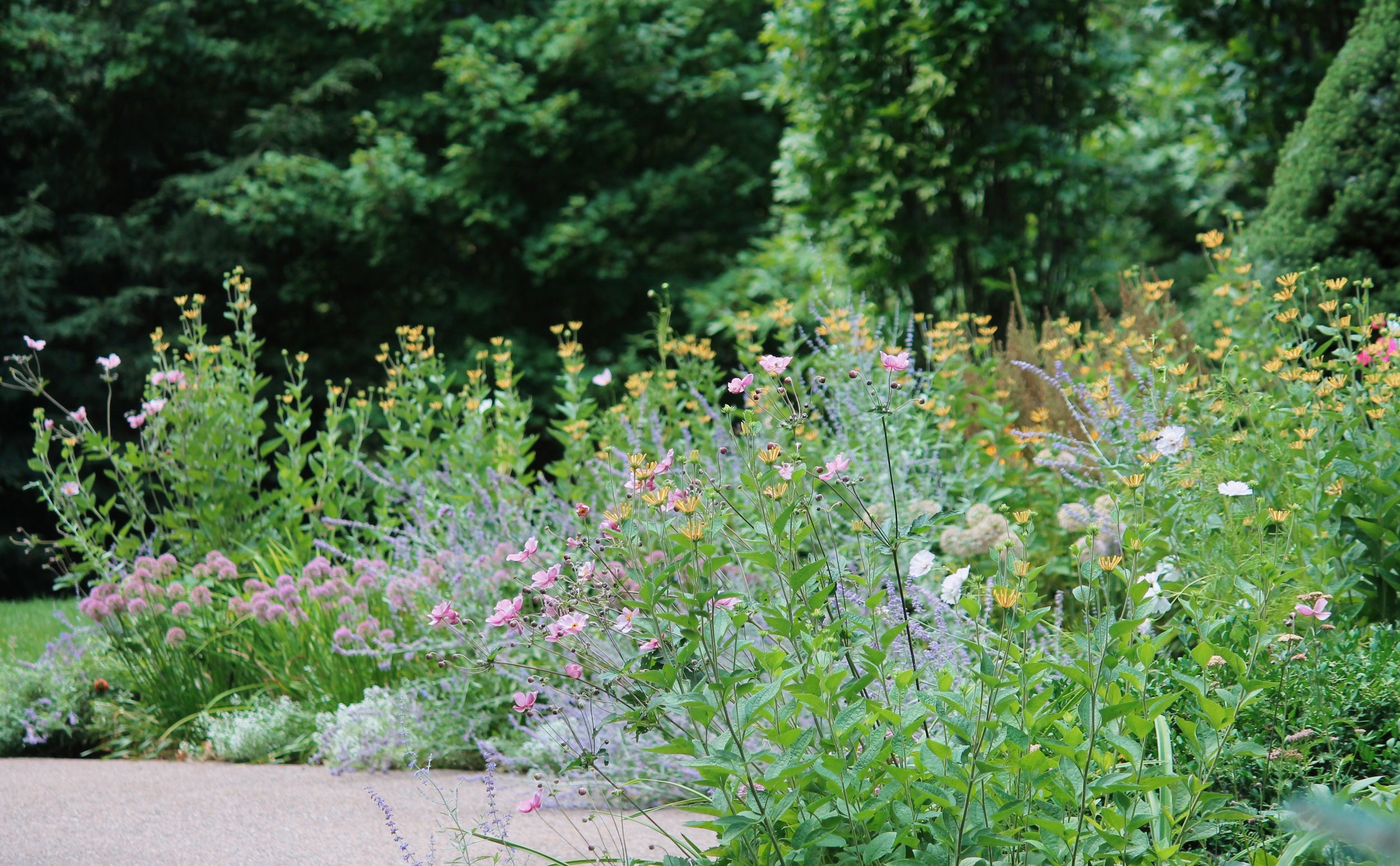
WHD’s Lands End Lane portfolio project in Shelburne Bay uses loose perennials and airy annuals in a cottage-garden setting. The plants selections are placed thoughtfully to either protect from the wind or use the wind as a design element. The project shows how movement and softness can work with a strong senses of place rather than relying on a rigid formal border.
Water Belongs in the Site Analysis
A waterfront property may have drainage problems that have nothing to do with the shoreline itself. Roof runoff, compacted paths, impermeable patios, shallow grades, and seasonal high water can all shape the planting conditions.
That is why a planting list should come after the base map and site assessment. The WHD landscape design process includes site documentation, topographic information, conceptual design, planting plans, and design details. For a complex waterfront property, those steps can prevent a beautiful but poorly placed garden.
A low area might call for plants that tolerate periodic moisture. A dry, windy bank might need a different palette and a slower establishment plan. Near the house, the priorities may be access, views, and winter movement. Near the water, the priorities may shift toward erosion, habitat, and restraint.
Do not treat the shoreline as a decorative backdrop. It is part of the growing conditions.
Lake Views Need Four-Season Structure
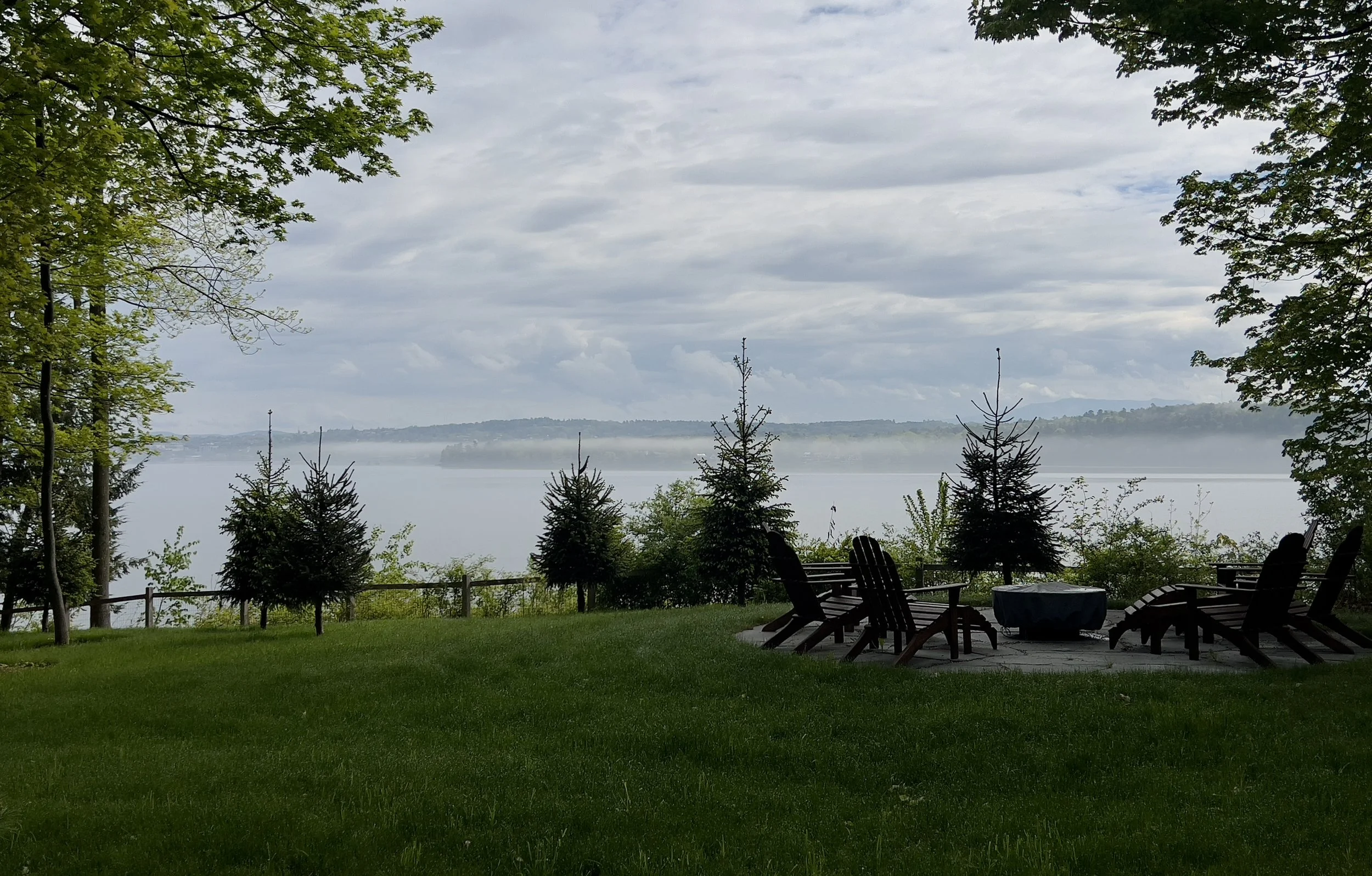
A waterfront garden can look spectacular in July and empty in February. That gap is not a small problem, It’s half the year.
Structure can come from evergreen foliage, multi-stem trees, ornamental grasses, bark, branching, stone, and seed heads left for winter habitat. The Shelburne Museum gardens show how seasonal succession gives a landscape depth: lilacs and peonies in spring, daylilies in summer, and flowering, herb, and vegetable gardens carrying interest into fall.
A private waterfront garden needn’t imitate that scale. It can borrow the principle: design with bloom times and planting successions in mind, not just the moment.
A Waterfront Project Needs Early Planning
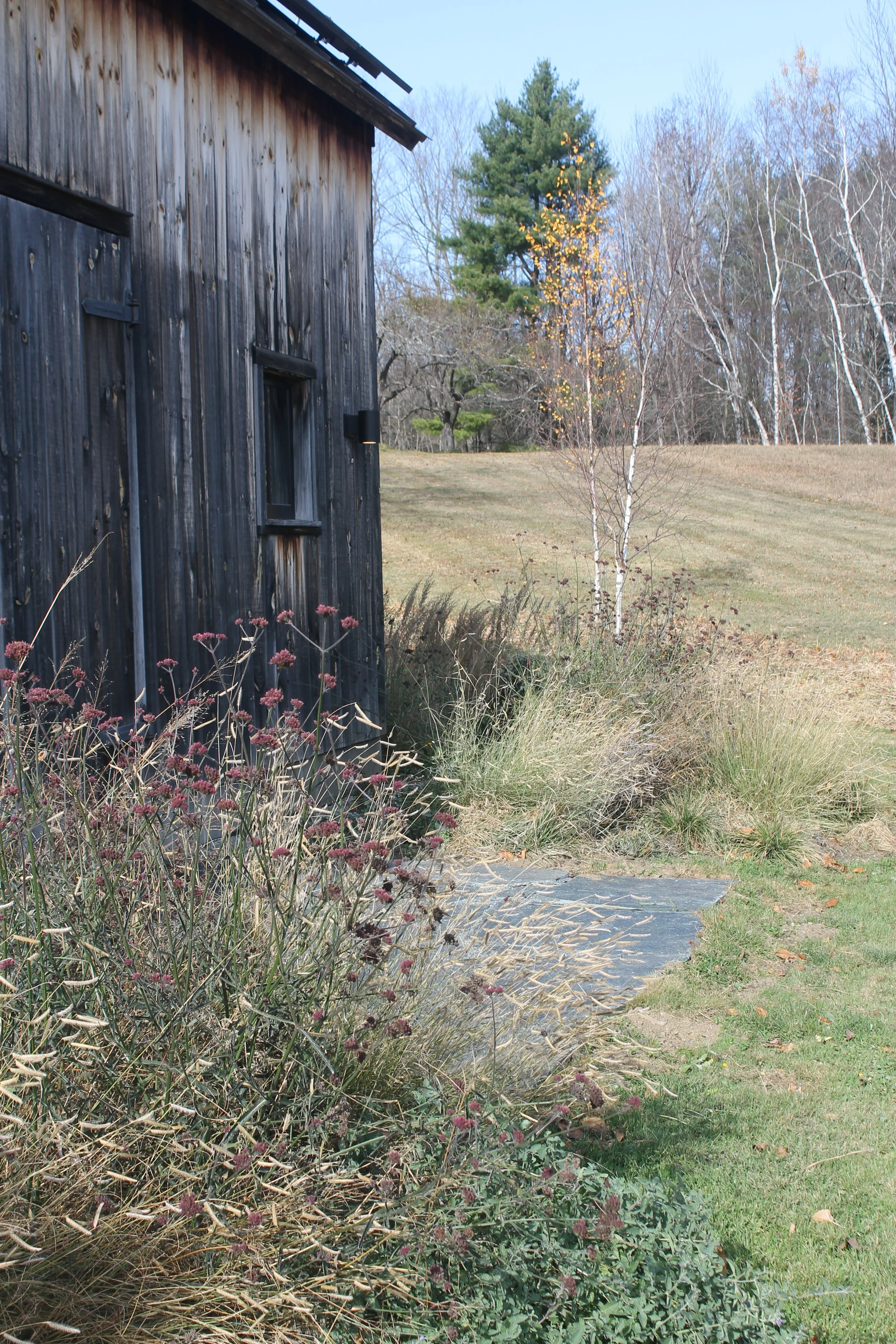
Winter is a practical season to begin. Leaf-off views make it easier to study the relationship between house, property line, lake, and neighboring landscapes. Photographs taken in summer still matter, but they should be read beside the bare-season structure.
Before contacting a designer, collect photos from the main rooms of the house, note where wind is strongest, identify drainage trouble, and write down which views must remain open. Include photos after rain or snowmelt if you have them. Those details are more useful than a polished wish list.
WHD’s design-only model allows a waterfront client to use the completed plans with a chosen contractor, phase the project, and request designer oversight during implementation. If you want a waterfront landscape ready for spring, begin with a project inquiry and ask about winter design availability.