Southern Vermont landscape design has to serve more than a view from the kitchen window. For homeowners in Manchester, Dorset, Winhall, and Stratton, a thoughtful property plan connects arrival, architecture, gardens, woodland, outdoor living, and long-term horticultural care. This guide explains how those pieces can work together for estates and second homes.
A Southern Vermont property often has more going on than a conventional residential yard. There may be a long approach from the road, a historic house, mature trees, a broad lawn, a woodland edge, a guest cottage, or an outdoor room that only comes alive for a few months each year. The landscapes job is to hold all of it together.
So, we begin with a simple question: how should the property feel as someone moves through it?
The answer is not found in a plant list. It is found in the junction from the road to the driveway, from the driveway to front door, and from the house into the garden. It is found in the way a path turns, how a lawn opens, where a tree frames the house, and whether an outdoor space feels connected to the rooms inside. It is also found in the less visible decisions; where service vehicles enter, how people arrive, what needs to be screened, and which parts of the property should remain quiet and natural.
This is especially important for an estate or second home. Owners may use the property differently in July than they do in October. Guests may only be present for weekends, while the garden has to remain healthy through weeks of absence. A good design accounts for that rhythm from the very start.
The goal is not to make every part of the property equally busy. Some areas should welcome people. Some should provide privacy. Some should support biodiversity, while others hold the edges of the property together. A coherent plan gives each area a role.
Four Property Patterns Across the Region
Southern Vermont is not one landscape. Manchester, Dorset, Winhall, and Stratton each bring a different relationship between house, land, and daily life.
Manchester Village and Country Estates
Manchester combines village properties, country homes, and larger estates that sit within a strong cultural and recreational landscape. The Village of Manchester describes its architectural character as a well-preserved record of a resort community that developed between 1850 and 1925. The town's wider landscape context includes Hildene, The Lincoln Family Home, a historic estate with gardens, farm, and trails; the Southern Vermont Arts Center, whose campus includes sculpture park and garden spaces; the Equinox Preserve, a protected conservation landscape; and Seven Springs Garden & Sculpture Park, a designed garden and sculpture landscape. These places are not WHD projects, but they help illustrate the range of relationships between architecture, cultivated spaces, art, woodland, and the surrounding Southern Vermont landscape.
That context matters to landscape design. A Manchester garden may need to feel composed near the house while opening gradually toward lawns, mature trees, or surrounding land. It may need to respect an established architectural character without becoming overly formal. It may also need to support more than one kind of use, from quiet morning walks to outdoor meals and larger gatherings.
Dorset Properties With a Strong Sense of Place
Dorset properties often call for a careful relationship between existing structures, mature planting, village character, and the landscape beyond. A successful design does not impose a generic country-garden look. It studies what is already present and makes the property more legible. Nearby Emerald Lake State Park offers a useful natural recreation and conservation reference for the broader Dorset area, although it should not be confused with a private designed garden.
That might mean clarifying a walk, strengthening a threshold, editing an overgrown planting bed, or creating a more useful connection between the house and a garden room. The work can be subtle. Subtle does not mean small. On an established property, a few well-placed changes can affect the way the entire landscape is experienced.
Winhall's Green Mountain Setting
Winhall brings a more dispersed mountain setting, with woodland edges, longer approaches, varied exposure, and properties that can feel quite private. Here, the design often needs to move comfortably between the house and the surrounding forest without making the transition feel abrupt.
Site analysis becomes particularly important. A property may contain several different planting conditions within a short distance. The sunny area near the house may behave very differently from the edge of the woods or the lower part of a drive. The landscape should respond to those differences instead of forcing one treatment across the entire site.
Stratton's Four-Season Resort Rhythm
Stratton properties are often used as retreats. The landscape may need to feel ready when the owners arrive, work well for guests, and remain orderly and healthy when the house is empty. The resort presents itself as a four-season destination with village dining, real estate, golf, mountain biking, winter activities, and other amenities.
That pattern creates a different design brief. The garden should not depend on daily attention from the owner. It needs an appropriate level of structure, seasonal interest, and horticultural oversight. Outdoor living areas should connect naturally to the house, while arrival spaces should be clear and welcoming in more than one season.
A Refined, Native-Forward Landscape
WHD's approach is native-forward without being limited to a rigid list of native plants. The question is always right plant, right place, considered in relation to soil, exposure, moisture, mature scale, surrounding ecology, and the character of the house.
That soil-first perspective matters on an estate. A planting may look beautiful in its first season and still struggle if compaction, drainage, light, or root competition were never addressed. Before selecting a palette, the design should understand the living conditions below the surface and the way those conditions change across the property.
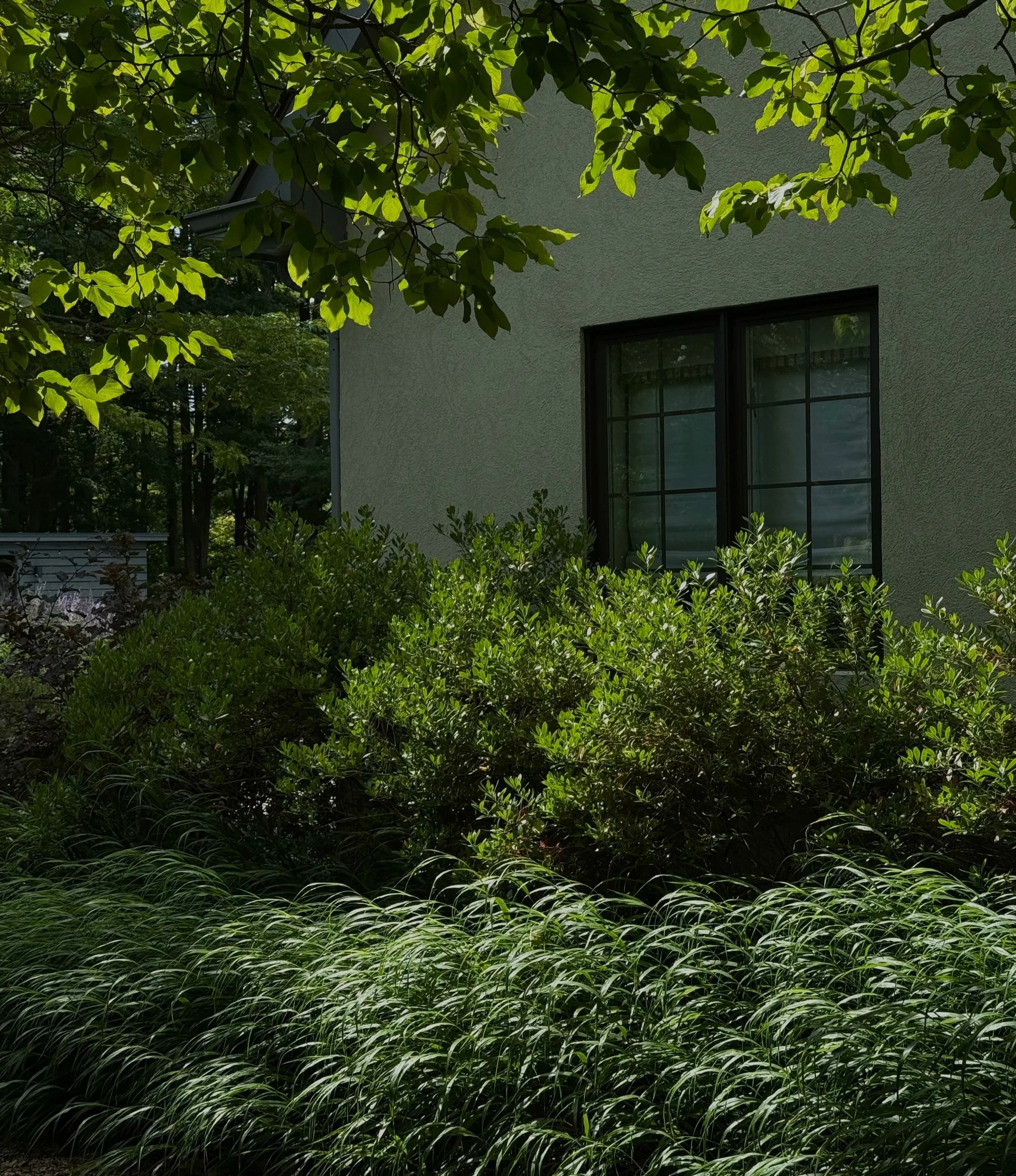
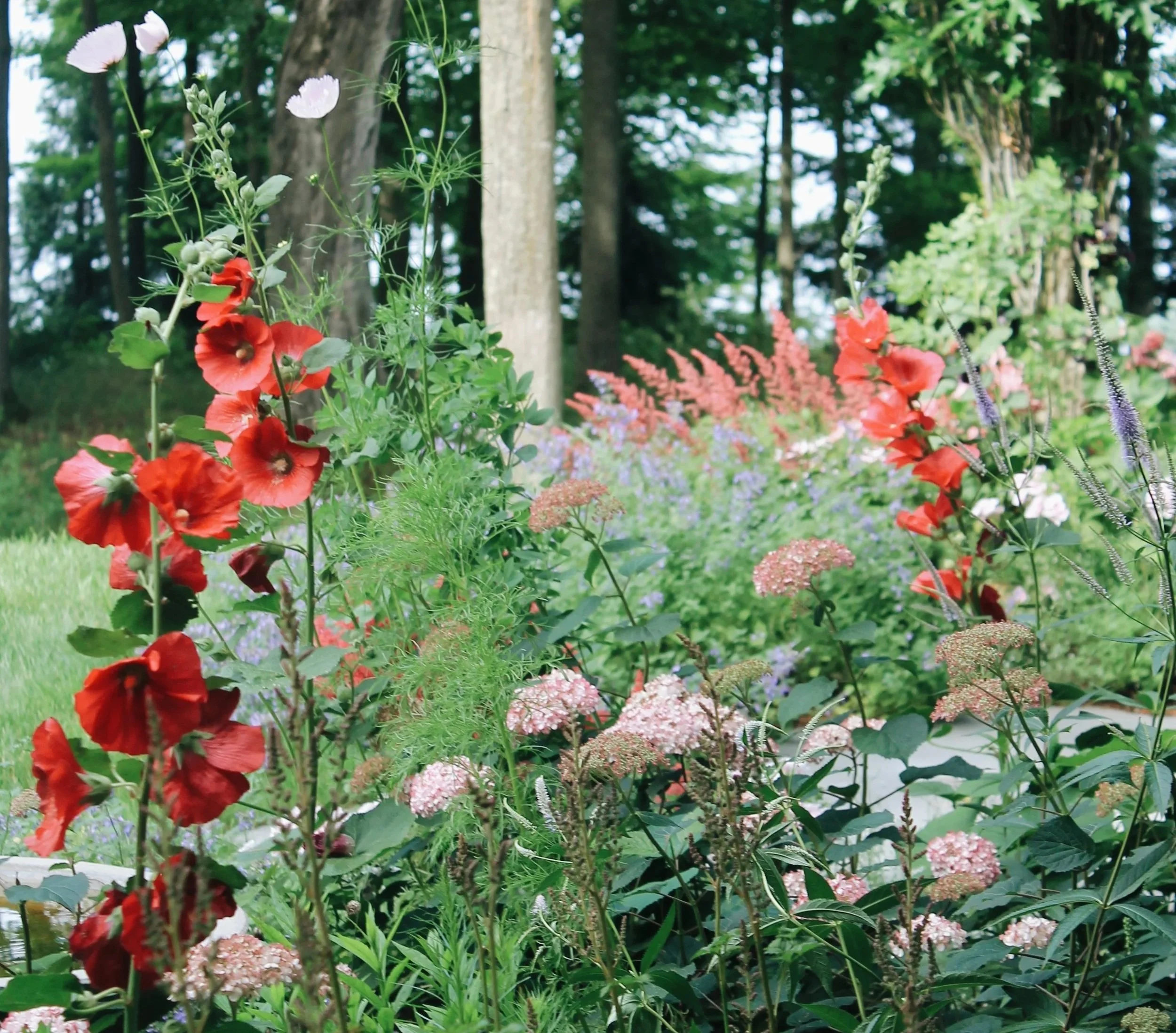
The visual result should feel naturalistic, but not accidental. Layered planting can soften a drive, frame a terrace, or connect a formal garden to the surrounding woods while retaining clear structure. Native and well-behaved ornamental plants can work together when each has a purpose. Biodiversity, seasonal rhythm, texture, and spatial clarity do not need to compete.
Four-season interest is part of that composition. Spring may belong to fresh foliage and early flowers. Summer may bring the fullest garden rooms and outdoor use. Fall can shift the emphasis toward seedheads, foliage, and the broader landscape. Winter reveals the value of stems, branching, evergreen structure, stone, and the underlying shape of the property.
The aim is not to make the landscape perform constantly. It is to give each season something honest and well placed to offer.
The WHD Difference: Designer-Gardener Thinking
Landscape design and garden care are often treated as separate services. One person creates a plan. Someone else installs it. A third person may be asked to care for the result without ever seeing the original design intent.
That separation can create problems. Plants get substituted without considering the composition. Spacing changes in the field. A shrub is pruned to fit a mistake in the layout. A planting bed becomes difficult to care for because nobody considered how it would mature.
Williston Horticulture & Design approaches the work differently. The designer-gardener perspective keeps the larger plan and the living material in conversation. Design decisions are informed by horticultural knowledge, and ongoing care can reveal where a garden needs refinement as it develops.
The work can include site analysis, master planning, planting schemes, plant sourcing, installation coordination, and a long-term care plan. Depending on the project scope, Sarah may also be present during installation to help set out plants and protect the relationships established in the design.
This does not mean every project requires the same level of involvement. Some owners need a complete property plan. Others need help with a specific garden area, a planting plan, plant procurement, or a consultation that clarifies the next step. The important thing is that the level of support matches the property and the owner's goals.
Start With the Property, Not a Plant List
Before choosing species, it helps to understand how the property works. Where do people arrive? Which rooms look toward the garden? Where do people sit outside? Is privacy needed from the road, a neighboring property, or the driveway? Which areas should feel open? Where do snow, water, shade, and foot traffic affect the design?
A thoughtful site review also considers the existing landscape. Mature trees may be the most valuable elements on the property, even when they are not in perfect condition. Old paths may reveal a useful circulation pattern. A neglected garden may contain plants worth preserving, moving, or studying before any clearing begins.
The question is not whether everything should stay. The question is what deserves to remain and what role it can play in the next version of the property.
The same principle applies to the edges. A lawn that meets the woods without transition can feel exposed. A dense wall of planting can feel closed in. A carefully edited edge can provide privacy, habitat, and visual depth while keeping the property connected to its surroundings.
This is where master planning earns its value. It prevents a series of reasonable individual decisions from producing a disconnected result.
From Master Plan to Plant Procurement
A design plan becomes real through many practical decisions. Plant procurement is one of the most important.
The plant selected on paper may not be available in the right size. A nursery may have a substitute, but the substitute may have a different habit, bloom time, mature scale, or relationship to nearby plants. A delivery may arrive before the site is ready. A tree may need to be held, protected, or placed differently than expected.
These details affect the design. They are not administrative afterthoughts.
A careful procurement process can include:
Refining the plant and material palette for the actual site.
Confirming species, sizes, quantities, and timing.
Reviewing substitutions before they change the character of the planting.
Coordinating deliveries with site preparation and installation.
Protecting plant material while the work is underway.
Setting out plants in the field so spacing and visual rhythm can be considered at full scale.
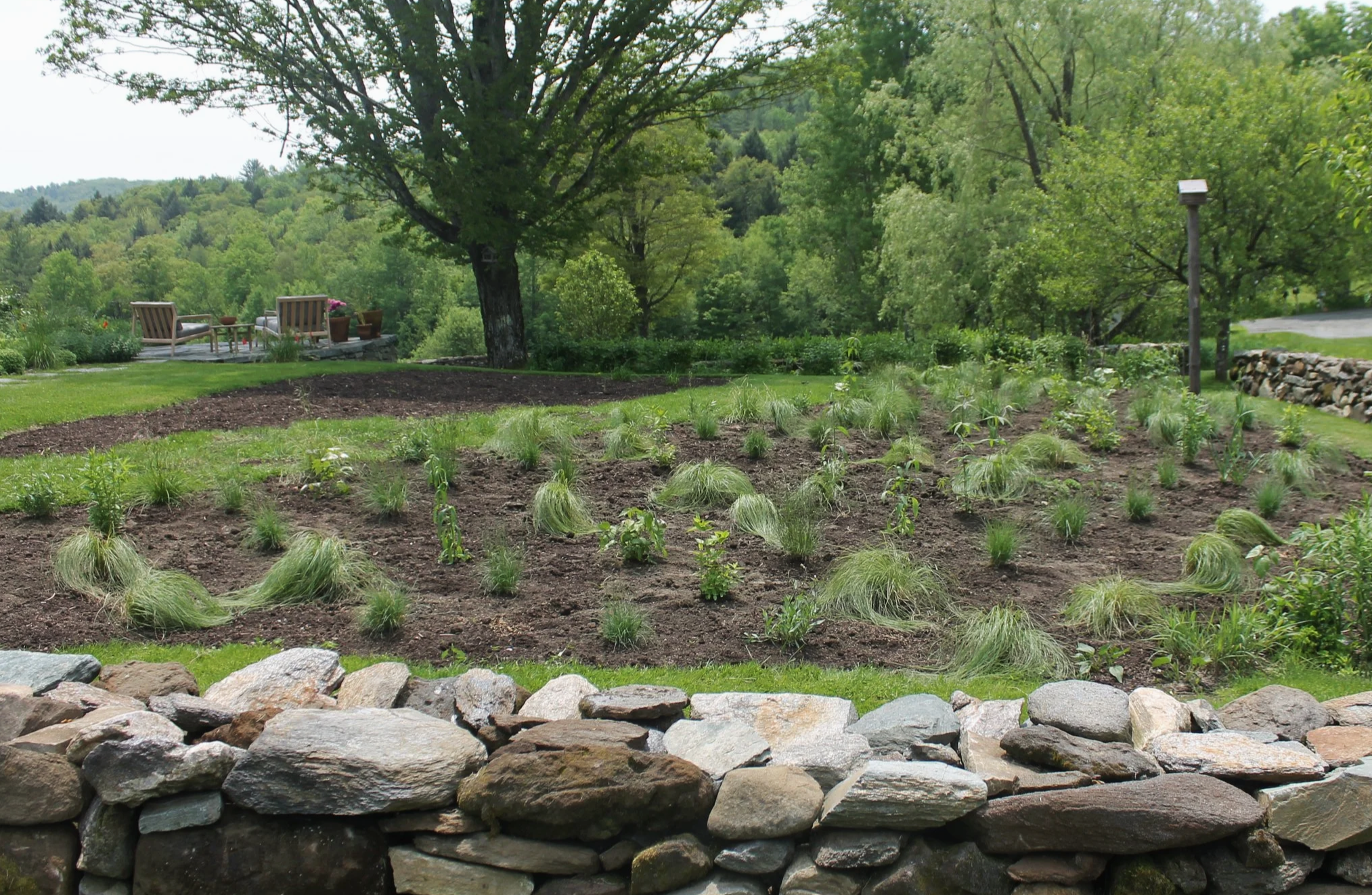
WHD's existing landscape design services include site analysis, master planning, planting schemes, and installation oversight. The exact level of procurement and installation support depends on the project. That flexibility is useful for second-home owners who may want a high level of coordination without needing to manage every conversation themselves.
The point is not to control every detail for its own sake. It is to keep the design from losing its logic between the drawing and the ground.
Designing for the Owner's Real Calendar
A full-time residence and a second home do not ask the same things of a garden.
A full-time owner may notice a struggling plant, a broken branch, or a developing weed problem early. A seasonal owner may not see the property for several weeks. By the time they return, a small issue may have become a larger one.
The design should acknowledge that reality. It should identify which areas deserve close attention, which plants need seasonal monitoring, and which maintenance tasks must happen before an owner's arrival. It should also clarify who is responsible for watering, pruning, storm follow-up, seasonal cleanup, and communication with other property professionals.
For some properties, the right answer is a defined maintenance plan. For others, the property needs a more involved form of private gardening that combines care with ongoing design refinement. WHD describes private gardening as ongoing site curation, where horticultural care and active design refinement happen together.
That distinction matters on a complex property. A garden is not static after installation. Plants grow. Light changes. Paths become more heavily used. A border may need editing. A tree may begin to shade an area that was once sunny. The best long-term care responds to those changes rather than treating the original plan as untouchable.
For owners who want to understand how design, installation, and long-term planning connect, WHD outlines its seven-phase landscape design process. The article explains the full workflow in detail. In practice, the process is a way to move from broad goals to a landscape that can be cared for, and adjusted over time.
What a Southern Vermont Landscape Should Become Over Time
A finished installation is not the final form of a garden. It is the point at which the design begins to live on the property.
Some plants establish quickly. Others need time to develop their full scale. The relationships between trees, shrubs, perennials, paths, and outdoor rooms become easier to understand as the garden settles. A good plan leaves room for that development.
This is not an argument for a landscape that looks unfinished. It is an argument for choosing immediate structure carefully while allowing the garden to gain depth. The property should feel intentional from the beginning, but it should not be forced into its final appearance in the first season.
Over time, stewardship becomes a form of design refinement. Pruning can reveal a better view. A plant can be moved when its growth pattern becomes clear. A border can be edited as the owner's use of the property changes. New layers can be added without disturbing the underlying structure.
That ongoing relationship is particularly valuable for an estate or second home. The owner does not have to make every decision alone, and the garden does not have to rely on a succession of disconnected fixes.
Why Winter Is the Time to Begin a Spring Project
Spring installation begins long before the first planting day. A property needs to be assessed, goals clarified, drawings developed, revisions considered, plant material sourced, and installation timing coordinated. Waiting until the ground is ready can leave too little time for the decisions that determine whether the work feels deliberate or rushed.
Winter is often a productive design season because the conversation can start before the property becomes busy with spring growth. Existing plans and photographs can be reviewed. Site concerns can be identified. The design can move through the appropriate level of refinement, and plant availability can be considered before delivery, and installation dates are fixed.
Higher-elevation and mountain properties add another layer of planning. Snow cover can limit what is visible. Exposure and access can affect scheduling. A shorter growing season may change the order in which work is carried out. None of those conditions should be treated as a reason to force the same solution onto every property. They are reasons to begin with enough time to understand the site.
If you are hoping to install in spring, beginning the design process during winter gives the project room for thoughtful decisions and realistic coordination. It also gives the owner a clearer sense of what needs to happen first, what can wait, and what level of installation oversight or garden stewardship will be useful after the work is complete.
Is Your Property Ready for a More Complete Plan?
A Southern Vermont landscape design project may begin with a new property, a major renovation, an overgrown garden, or a simple feeling that the grounds no longer work as they should.
The first step does not need to be a commitment to redesign everything. A consultation can clarify the property's opportunities, the areas that need attention, and the appropriate scale of the next phase. It can also help determine whether the project calls for a complete master plan, a focused planting design, plant sourcing, installation coordination, private gardening, or a combination of services.
Before the conversation, it is useful to gather any existing surveys or plans, photographs, renovation schedules, and information about how often the property is occupied. A list of recurring problems helps too. So does an honest description of what might not be working.
Williston Horticulture & Design works with homeowners to create ecologically curated landscapes that are functional, plant-focused, and built to evolve. For a Southern Vermont estate, village property, or second home, the aim is not simply to add more garden. It is to make the whole property feel considered.
Begin with a landscape consultation to discuss your Manchester, Dorset, Winhall, or Stratton property and determine what the landscape needs next. Winter consultations can help homeowners begin planning now for a considered spring installation.